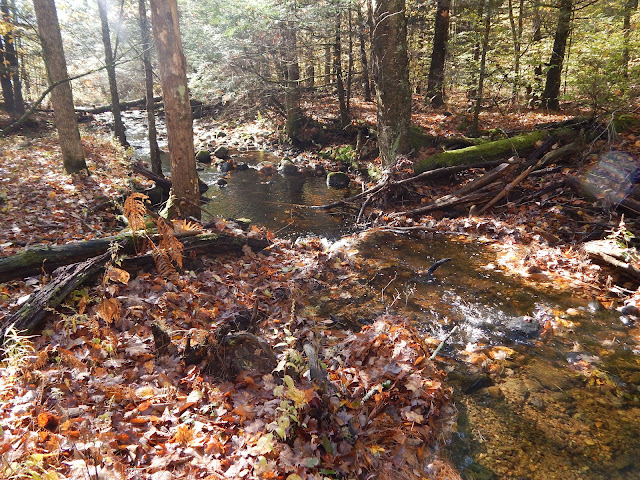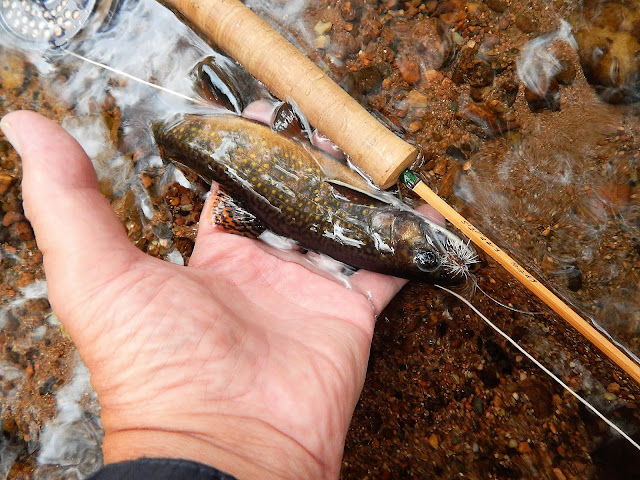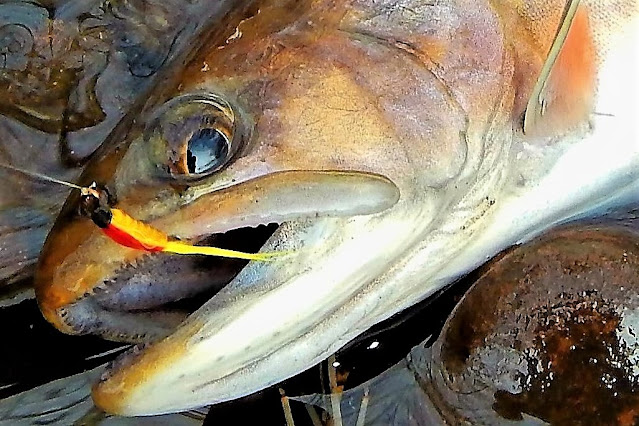
In 1771 Boston merchant John Rowe wrote of traveling to the town of Pembroke, where he caught 62 brook trout while fishing the Indian Head River. Rowe did this during the month of April for three years running, with similar success. Although he does not pin point his exact location, it seems likely that Rowe was fishing below the dam of the Curtiss Iron Works for salter brook trout trying to migrate into the Idian Head from the tidewaters of the North River. The brook trout may have at that time still been able to reach the river above the dam through a flume in the dam left open in the spring to allow passage of herring and shad.
From the book Wild River..by Warren Winders...
These old colonial dams still present a major problem for the migration of wild brook trout. Connecticut has countless little dams that no longer serve any purpose. They cause more harm in the form of holding back heated silted waters. They block brook trout from upper reaches of streams where the waters are cooler and more conducive to wild brook trout. These upper reaches are also prime spawning locales and without access to them the brook trout cannot reproduce.
I will be quoting some more of Warren Winders thoughts and writings in future posts.
His book can be purchased here
Wild River by Warren Winders – Sea-Run Brook Trout Coalition (searunbrookie.org)


.JPG)
.JPG)