Wednesday, March 11, 2015

Several Firsts this Day

Monday morning the decision was made to check out a stream to see if I could fish a few flies and attempt to perhaps take a fish or two. I was delighted to see that the bright sun was doing its magic. I felt so comfortable fishing with only a wind breaker and light fleece jacket. The air temp was mid forties and no wind, after the cold, cold winter that was a welcomed relief. As I pulled into the parking area the ground was so soft that the mud was slippery, and not the snow. There was one other vehicle parked there, perhaps another angler I thought, or maybe a hiker. I did not bring waders so I was ready to fish in minutes. I did however bring my new Cabelas glass rod for its first tryout.

The stream was ice free in several locations. Its clarity brilliant even with the snow melt. I started walking to the stream and found the snow to be at least knee deep and some areas thigh deep. This kind of walking will tire you fast not to mention the fact your always falling. I knew this was going to be a one or two spot outing.


Armed with the new rod I placed myself on firm footing. I chose to fish dries this day, and sent the fly on its mission. I would love to say that I had a fish rise on the first cast but that did not happen, instead a fish rose on the second cast. The rise was not a lethargic one either the fish was indeed hungry. I sent the fly back out and just a tad further from the first rise he again took a swipe and missed. On the third time the fish again came up, this time he was pricked. A few twists and turns and the fish was at hand. It was not a trout but creek chub. The silvery fish was my first fish on the fly since mid January, and it felt real good.


I continued to work flies in the few open pools I could fish. The thought was could there be another willing fish to take a fly. The answer was yes, only not a trout but another chub. The trout were indeed there only not willing to take.
The one big finding this day was the performance of the little Cabelas glass rod. I tried several types of casts from roll casting to throwing out some longer ones and the rod performed them all very well.

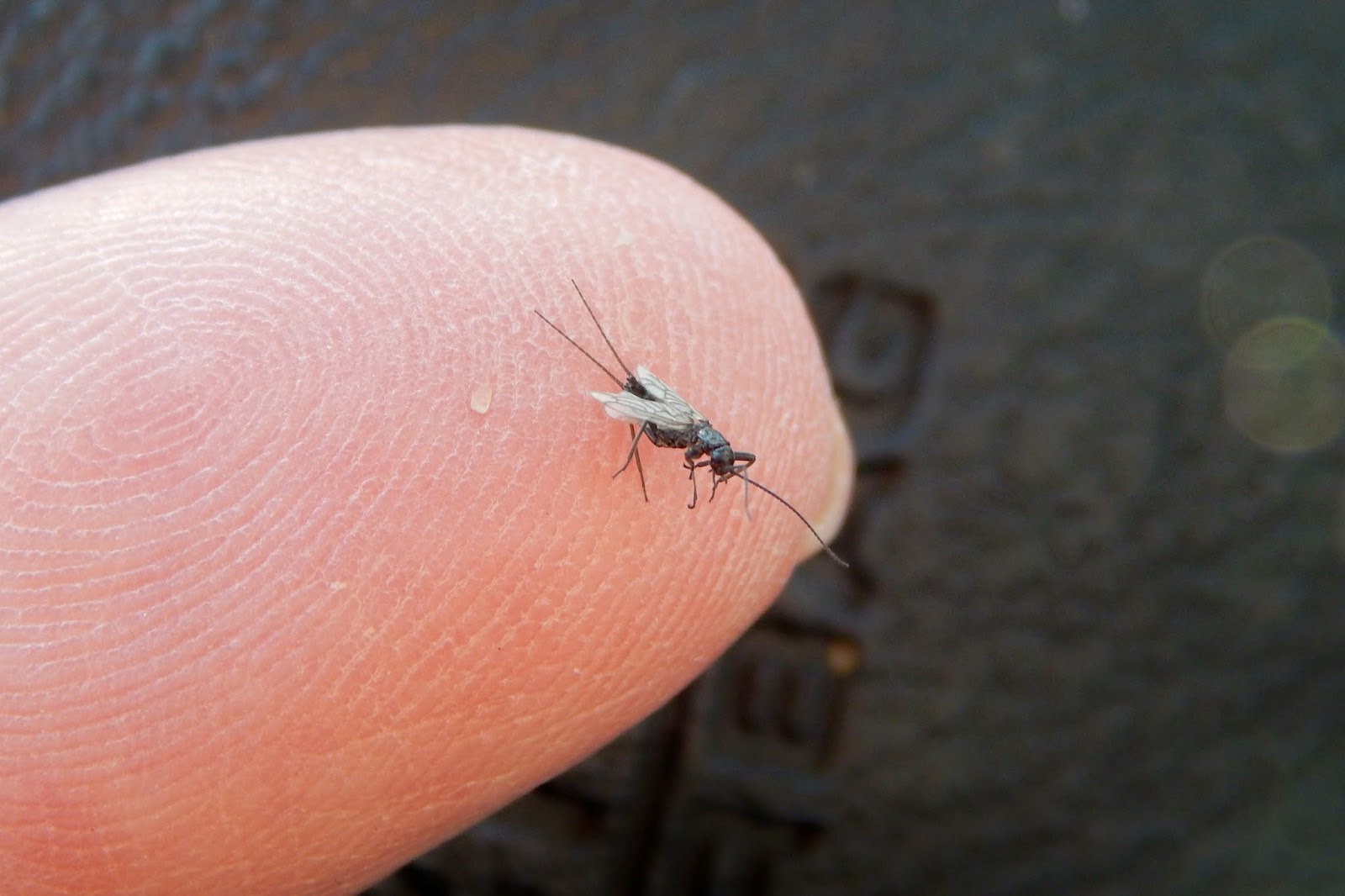
These little guys were out and about this day. Any one care to tie one?


This was a great day to be out. A new rod, good weather, a fly cast for the first time in almost two months, and a fish to hand on a dry fly.

Be sure to scroll down to see "My Photo Of The Day".


Sunday, March 8, 2015

The "Cinberg"

Back in January I did a post on a fly pattern, it was a soft hackled dry fly. When I first saw the fly on a website I thought "wow" this has got to be something new. Further research into this pattern showed that these flies have been around for some time. The English have been tying these flies and in the United States these flies have been a staple in some areas. January 20, 2015 was the first knowledge of these flies by this angler.

The English pattern that I wrote of back in January is called a "Jingler". It's tied with a thread body, and cock hackle then partridge soft hackle. Some are tied with a tail, but it is not necessary.

This is the American version of a similar fly, called a "Cinberg". The fly was created by Dr. Bernard Cinberg of New York. The doctor practiced in New York City and had a summer home in the Catskills near the Neversink River. Sometime in the 1930's this fly was first tied and fished. It was a success, especially with the brook trout. The fly was also mentioned by the late Datus Proper in his book "What The Trout Said". His reference to a fly he called a "bent hackle" fly told of the fly still being fished.

The "Cinberg"
Well I sat down at the vise and attempted to tie the Cinberg. It's basic components are pretty simple. A dry fly hook, some colored thread for the body, Coq de Leon for the tail, brown dry fly hackle, and wood duck for the soft hackle collar. The only problem is in working with the wood duck feather. Because the wood duck can't be wound on, like a traditional soft hackle, like a partridge or grouse.

When completed the fly looks pretty good, considering there are feathers going every which way. The fly looks like an insect no matter which way it may land on the water.

From the photos you can see a wonderful buggy looking dry fly.


"Cinberg" Dark Version
This photo shows the Cinberg as it would light on the water. The cock hackle giving support, and the thin barred legs from the wood duck looking like the legs of an insect.


Thursday, March 5, 2015

I do remember......

Anticipation, waiting for this seemingly never ending winter to let go of us New Englanders and allow us to seek greener paths along a chosen small stream, and with a smile on our faces cast a dry fly in hopes a willing wild trout will strike.


A wonderful late Spring day. Days such as these when there is an intoxicating sound of water rushing over wood and stone. 


In a quiet eddy, or a break, a trout sits. His territory is staked out, this is a prime place on the little stream.


The Bomber is cast into the current, it floats and is carried several feet downstream. The fly is cast again, as it nears a quiet spot in the flow you notice a swirl, then another the trout having trouble in eating the fly. The line is picked up and again is tossed into the stream. As it approaches the spot where the trout hit before a second rise takes place. You feel tension, and the hook drive into the fish. He makes a run putting a nice bend in the rod. Several more dashes for freedom are turned back. As the trout accepts defeat and now lies at hand. The brown is lifted and admired, a quick photo and he is released into his pristine home.


Tuesday, March 3, 2015

Ringneck Pheasant

The ringneck pheasant is a bird that I believe is underutilized in fly tying. While you may say what about the "Pheasant Tail nymphs" that's a fly that is perhaps the most recognized fly in the world, and it's true. But the tail is only a small part of the feathers available to the tyer. One fly tyer and angler that I know of used the pheasant in many of his innovative flies, that was Jack Gartside.

In this series of flies, this being the first I'll show you a few simple and easy to tie patterns. These flies can be effective on both cold and warm water fish. Most of the flies will be tied using only the feathers from a pheasant.


The flies below can be used as wet flies, streamers or nymphs. I tied these unweighted, although a few wraps of non-lead wire could be used in the body.
Pattern #1. all feathers are from a pheasant. The body except for the tinsel tag is from the tail of the pheasant.


Pattern #2 is all pheasant except for the peacock, and the squirrel tail wing.


Pattern #3, again all pheasant with exception of the peacock.

The beauty part of the ringneck pheasant is its cost. You can purchase a whole skin for about 20.00. That will give you a lot of flies, and a beautiful selection of feathers. I just saw this......Cabelas has ringneck pheasant skins for 13 bucks...