Sunday, November 8, 2020

The "Little Creek".....

What's going on...This little creek that flows into a small stream has a lot of history with me. I first found out about it when researching the stream which it flows into. The article told me it was part of the protection the small stream had. "All tributaries shall fall under the same rules"....so that stirred interest into this little creek and i found myself checking it out. I started walking it from it's start to where it enters into the small stream. Parts of it were kind of swampy and others were real gorgeous. It had it's share of pools and riffles with the necessary undercut banks with a fair amount of woody debris to make any wild trout happy. My first attempts at fishing the little creek were less then stellar. More tiny brown trout scattered then caught. But I continued to fish it and over the many years I have come to some conclusions. One of them is that the brown trout in this little creek are for the most part  born, live and die within it's waters.


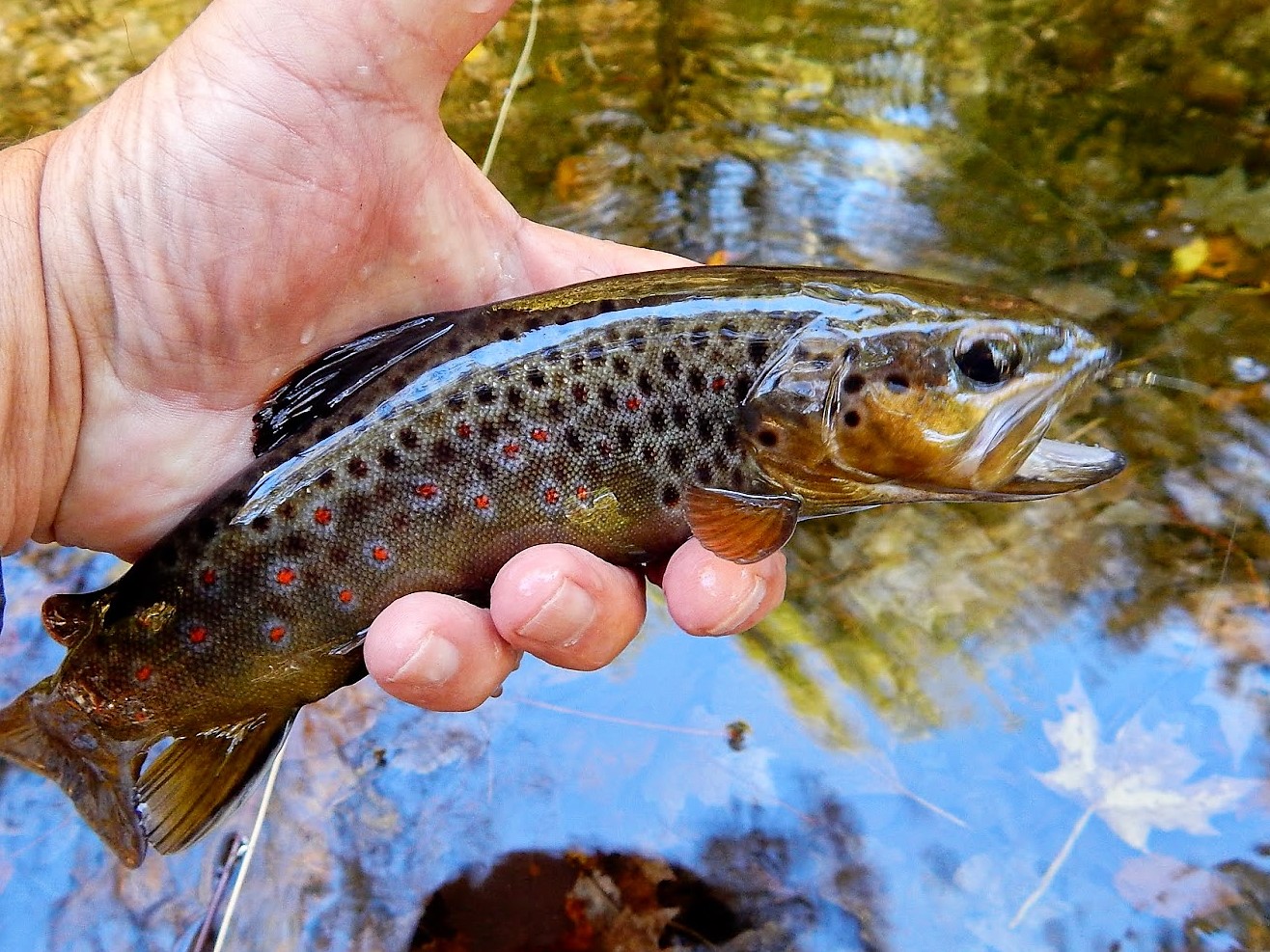
This is one of the many brown trout I have taken from this little creek over the last 20 years. Most of them look identical both in size and color.
 

This is a wild brown trout taken from the little creek. It to has the same coloration and spotting as the rest of the brown trout from the creeks waters.
 

And just last week I tangled with this fellow. Please note the color and spotting of this fish. All of these fish seem to possess the same genetics. Is the creeks waters responsible, or perhaps the same offspring of the original browns that spawned in the little creek many years ago. This is one of those magical things that keep me going back to the "little creek"....


Thursday, November 5, 2020

Soft hackle materials, part three Starling

The Starling, a game bird or not. One thing for certain there are millions of these birds everywhere. The starling is one of my favorite feathers to tie with. A  quality skin can offer you a vast amount of beautiful feathers in which to work with. Many of these feathers have an iridescent sheen to them. Many have multi colored tips on the feather. The starling can be a bit weak when it comes to winding it on the hook but i have not had major problems with this. The main issue is finding a high quality skin. Most are pretty poor and one should not buy one unless you can actually see it. I have some good skins and I cherish them. Starling skins come in colors to. I have skins that are dyed green, and yellow. I also have one that has been "bleached" which creates some very effective flies.

Starling feathers above are...top left a black starling with tips of gold...bottom left a black starling with that remarkable iridescence...top right a feather from a bleached starling again showing that iridescence... bottom right, a bleached starling feather showing a beautiful tawny brown color.


Starling and Purple...the feather is from the top left
 

Starling and Purple..the feather is from the bottom right. The feather is shorter and is tied on a size 14 hook.
 

Orange and Starling..tied with the feather from the top left


 Starling and Orange...feather from the bottom left


Tuesday, November 3, 2020

You have to be tough to make it here....

A high gradient freestone stream. An iconic New England scene. These streams are the brook trout streams  I love to fish. They are what I like to call "rough and tumble" The swift waters crash over and around boulders that have been in place for centuries. There are little sanctuaries in the plunges where the wild brook trout hold.  The brookies in these stream are rough and tumble tough. They have and continue to endure hard times making a home in a most hostile environment. It may be hostile but it's beautiful and the brookies here would not want it any other way. "This is home"...

I fished this beautiful stream this week. It was cold and blustery, leaves as well as snow flurries were in the air. But i could have not had a better day for the brookies were in a feeding mood.


Those little pockets held a fish or two.
 

Just look at that fish. Coming from a stream that does not have the best as far as food goes, it is a specimen of health and well being.


A gentile place along this stream.
 

It held several like this.
 

A fly that was up to the task...


Sunday, November 1, 2020

Soft Hackle Feathers, part two...hen feathers

Hen hackle, feathers that come from hen chickens. These are the most common and the least expensive of hackle available to the soft hackle fly tyer. These come in a variety of colors, and most patches have a great amount of feathers is various sizes on each patch. Most of the feathers are uniform in shape and they are easy to work with. I have found that very few of them break when winding. They also lay nicely when wound and are not fighting with you in the process. The hen feather can help you when trying to tie the old patterns where the original hackle used is no longer available or is so expensive. Most times you can match up those feathers to a hen patch.

But the true test comes in the movement of a hackle to draw a strike. Hen feathers do just that. Their movement in water is incredible. Soft and subtle and so life like. The photo above shows hen hackle in various sizes, shapes and colors.


Gray hackle and green....a simple fly that has many fish to it's credit
 

Gold and claret...
 

This is one of my favorite soft hackle flies. Cream and yellow...these flies can be found on the water from May through September. They are a great trout fly but I also have luck using them on bluegills and bass.